
How to Detox Your Home: The Non-Toxic Swap Guide (Room by Room)
Room-by-room guide to removing toxic chemicals from your home — non-toxic swaps for cleaning products, cookware, air quality, and water.
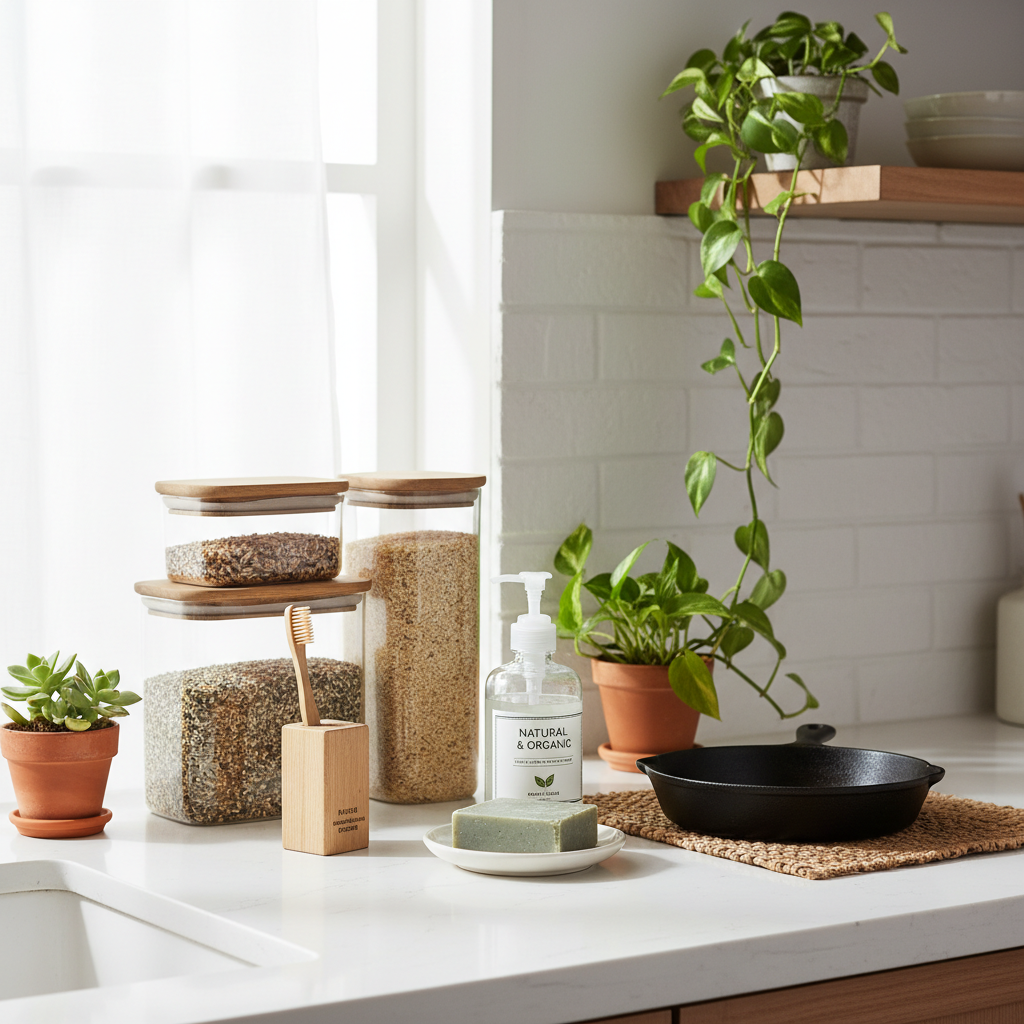
How to Detox Your Home: The Non-Toxic Swap Guide (Room by Room)
This post contains affiliate links. I only recommend products I've personally vetted.
The Products You Use Every Day Are the Problem
Most people think about what they eat. They buy organic produce, read ingredient labels at the grocery store, avoid artificial dyes and preservatives.
Then they go home and spray synthetic fragrance air freshener in every room, wash their clothes in petroleum-derived detergent, cook with a non-stick pan that off-gasses at high heat, and wonder why they feel inflamed, tired, and foggy.
The food matters. The home environment matters just as much — and most people have never thought about it.
This isn't about fear. It's about information. Here's a practical, room-by-room guide to reducing your toxic load at home — the swaps that make the biggest difference, what you actually need to replace, and what you can ignore.
Why Your Home Environment Matters
The EPA estimates that indoor air is 2–5x more polluted than outdoor air in most homes. The primary sources:
- VOCs (Volatile Organic Compounds) — off-gassed from synthetic fragrances, paints, cleaning products, and flooring
- Endocrine disruptors — chemicals that mimic or block hormones, found in plastics, personal care products, and pesticides
- Heavy metals — lead (old paint, plumbing), arsenic (pressure-treated wood), mercury (some light bulbs, fish)
- Mold and mycotoxins — particularly in bathrooms, basements, and buildings with water damage
The goal isn't to live in a sterile bubble. It's to reduce the chronic low-level exposure that accumulates over years and decades.
Room by Room: The Highest-Impact Swaps
Kitchen
1. Non-stick cookware → Cast iron or stainless steel
Teflon (PTFE) is stable at normal cooking temperatures but begins to break down above 500°F — which is easy to hit with a preheated pan. The replacement coating (GenX, used after PFOA was phased out) has its own concerns. The non-stick coating also degrades with use, and those particles end up in your food.
Swap: Lodge cast iron (lasts a lifetime, naturally non-stick when seasoned) or All-Clad stainless steel. Both are inert, durable, and inexpensive relative to their lifespan.
2. Plastic food storage → Glass
Plastics labeled #3, #6, and #7 can leach BPA and phthalates into food, especially when heated (microwave) or used with acidic foods. Even "BPA-free" plastics often contain BPS or BPF — similar endocrine-disrupting compounds.
Swap: Pyrex or Anchor Hocking glass containers. Same price range. Last decades. Safe for microwave, oven, and freezer.
3. Synthetic dish soap → Plant-based
Conventional dish soaps contain synthetic fragrances (phthalates), SLS/SLES (skin irritants), and triclosan (antibacterial agent linked to thyroid disruption). These rinse off dishes — and into the water supply.
Swap: Branch Basics or Dr. Bronner's Sal Suds. Both are plant-derived, biodegradable, and fragrance-free options are available.
4. Tap water → Filtered
Depending on your municipal water source, tap water may contain chlorine, chloramines, fluoride, lead (from pipes), and trace pharmaceuticals. None of these are acutely toxic at normal levels — but daily consumption over decades adds up.
Filter options:
- Berkey counter-top filter — removes 99.9%+ of contaminants including heavy metals and bacteria
- Clearly Filtered pitcher — NSF certified, removes 365+ contaminants
- Under-sink reverse osmosis — most thorough, higher cost
Bathroom
1. Synthetic fragrance products → Fragrance-free or essential oil based
"Fragrance" on a label is a trade secret — it can represent any combination of hundreds of chemicals, many of which are undisclosed phthalates, synthetic musks, or known allergens. The FDA doesn't require disclosure.
This applies to: shampoo, conditioner, body wash, lotion, deodorant, laundry detergent, dryer sheets, air fresheners, candles, and cleaning products.
Swap: Look for "fragrance-free" (not "unscented" — unscented products sometimes add a masking fragrance). Or products scented only with essential oils with full ingredient disclosure.
Brands that disclose fully: Dr. Bronner's, Every Man Jack (men's), Alaffia, Acure.
2. Conventional deodorant → Aluminum-free
Conventional antiperspirants work by blocking sweat ducts with aluminum salts. The aluminum-breast cancer link remains debated in the literature, but aluminum accumulation in tissue near lymph nodes is documented. Sweating is also a natural detoxification pathway — blocking it entirely isn't without tradeoff.
Swap: Native, Schmidt's, or Primally Pure. Natural deodorants work — they just require a 2–4 week adjustment period as your microbiome adapts.
3. Plastic toothbrush → Bamboo
Minor swap but a meaningful one for environmental load. Bamboo toothbrushes are biodegradable, work identically, and cost the same or less when bought in bulk.
4. Synthetic shower curtain liner → PEVA or fabric
Standard PVC shower curtain liners off-gas dozens of VOCs when new — that "new shower curtain smell" is the off-gassing. PEVA is a safer alternative, and a fabric curtain with regular washing is better still.
Laundry Room
1. Conventional detergent → Plant-based
Mainstream detergents contain optical brighteners (synthetic fluorescent chemicals that stay in fabric and contact your skin all day), synthetic fragrance, 1,4-dioxane (a probable carcinogen formed in the manufacturing of SLS), and petroleum-derived surfactants.
Swap: Branch Basics laundry concentrate, Molly's Suds, or Seventh Generation Free & Clear (fragrance-free, no dyes).
2. Dryer sheets → Wool dryer balls
Dryer sheets coat fabric with quaternary ammonium compounds and synthetic fragrance. Wool dryer balls do the same job (reduce static, soften fabric) with zero chemistry. Add a few drops of essential oil to the balls if you want scent.
A set of wool dryer balls lasts 2–3 years and replaces hundreds of dryer sheets.
Living Areas
1. Synthetic air fresheners → Open windows + plants + essential oil diffuser
Febreze, Glade, and similar products contain synthetic fragrance (phthalates), propellants, and various VOCs. They don't remove odors — they coat your nasal receptors so you can't detect them.
Actual air improvement:
- Open windows for 10–15 minutes daily — the simplest thing most people don't do
- Air-purifying houseplants (snake plant, spider plant, pothos) — modest effect but real
- HEPA air purifier — meaningful impact on particulates, allergens, and VOCs
- Essential oil diffuser with pure essential oils (not fragrance oils)
2. Conventional candles → Beeswax or soy + cotton wick
Paraffin candles (the standard) are petroleum derivatives. When burned, they release benzene, toluene, and soot. Beeswax candles actually emit negative ions that bind with airborne particles, mildly purifying air. Soy candles with cotton (not metal-core) wicks are a clean alternative.
What to Prioritize
You don't need to swap everything at once — that's overwhelming and expensive. Do it gradually as products run out. Here's the order of impact:
| Priority | Swap | Reason |
|---|---|---|
| 1 | Synthetic fragrance in personal care | Daily skin contact, highest exposure |
| 2 | Cookware | Direct food contact + heat |
| 3 | Laundry detergent + dryer sheets | Fabric against skin 24/7 |
| 4 | Cleaning products | Respiratory exposure during use |
| 5 | Food storage plastic | Food contact |
| 6 | Air fresheners/candles | Respiratory exposure |
| 7 | Water filtration | Cumulative consumption |
What I Use at Hidden Springs Forest
We live on 30 acres in rural Illinois — we're growing our own food, managing a working property, and paying attention to what goes into and onto our bodies.
For supplements and superfoods, I use Garden of Life and Organifi — USDA Organic certified, non-GMO, fully transparent sourcing.
For greens and daily nutrition, Organifi Green Juice — USDA Organic, glyphosate-free, third-party tested.
The foundation of a non-toxic lifestyle isn't about buying expensive products. It's about understanding what's in the things you already buy — and making deliberate choices when you have the information.
Fungi For Life LLC · Justin Hagan · Hidden Springs Forest, Strasburg, Illinois
This post contains affiliate links. See our full FTC Disclosure and Privacy Policy for details.
📚 Related Reading: Best Water Filtration for Homesteaders · Gut Health 101 · Best Infrared Sauna for Home Detox