How to Find Morel Mushrooms: A Forager's Field Guide to Illinois and the Midwest
The forager's field guide to finding morel mushrooms in Illinois and the Midwest — timing, terrain, trees, and everything the old-timers won't tell you.
How to Find Morel Mushrooms: A Forager's Field Guide to Illinois and the Midwest
Affiliate Disclosure: This post contains affiliate links. If you purchase through our links, we may earn a commission at no extra cost to you. We only recommend products we personally use and trust.
Every spring, something remarkable happens in the forests and creek bottoms of central Illinois. The soil warms, the redbud trees bloom, and if you know where to look — morel mushrooms emerge from the earth like nature's most coveted secret.
Morels (Morchella spp.) are widely considered the crown jewel of North American wild foraging. They're prized by chefs, hunters, and homesteaders alike — and here at Hidden Springs Forest in Strasburg, Illinois, we're fortunate enough to live right in the heart of morel country.
This guide is everything you need to find them.
What Are Morel Mushrooms?
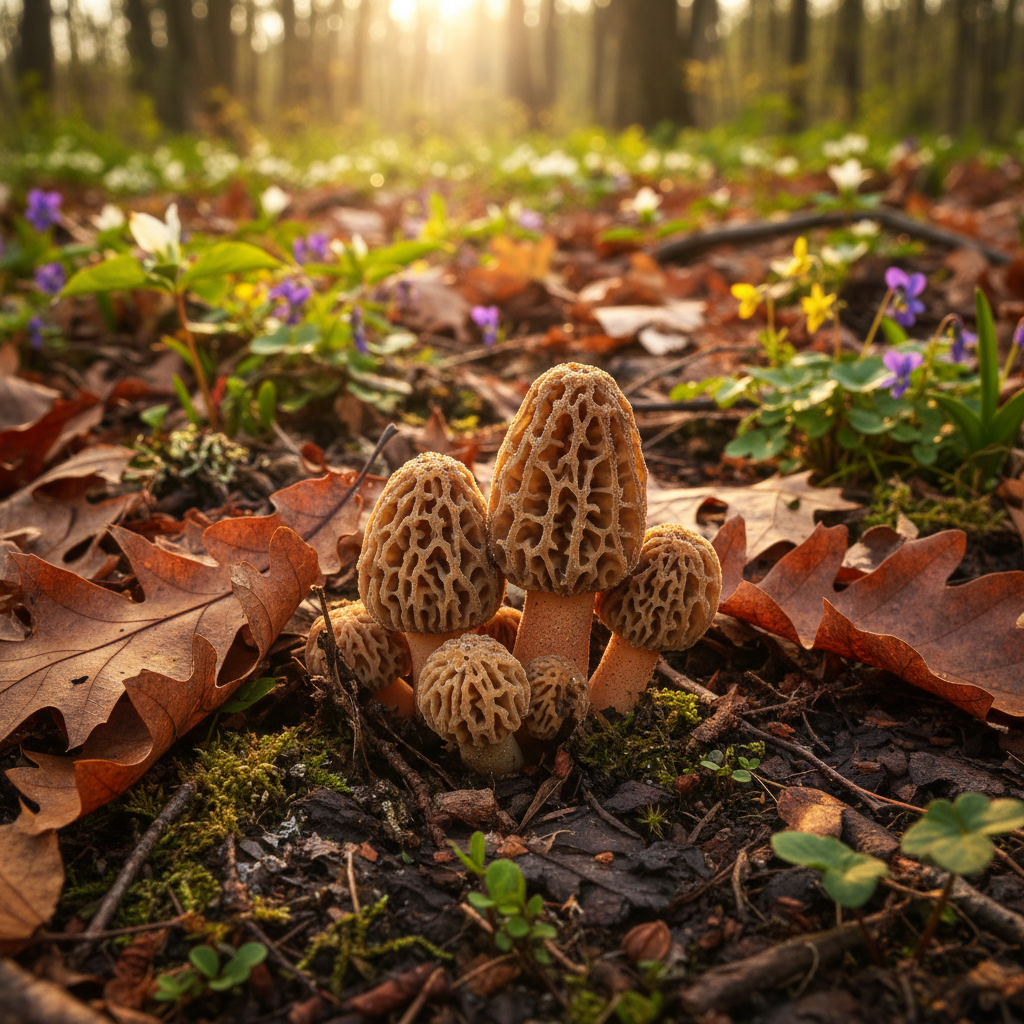
Morels are wild edible fungi with a distinctive honeycomb-patterned cap and hollow stem. They fruit once per year — typically April through May in the Midwest — and cannot be commercially cultivated at scale. Every morel you eat was found in the wild.
There are several species in the Morchella genus:
- Yellow Morel (Morchella americana) — the classic, most common in the Midwest
- Black Morel (Morchella angusticeps) — fruits earlier, often near ash trees
- Half-Free Morel (Morchella punctipes) — smaller, cap only partially attached to stem
All true morels are edible when cooked. Never eat morels raw — they contain small amounts of hydrazine compounds that are neutralized by heat.
When Do Morels Fruit?
Timing is everything. In Illinois, the window typically runs from early April to mid-May, though it shifts year to year based on:
- Soil temperature: Morels emerge when soil reaches 50–55°F at 2-inch depth
- Nighttime temps: Warm nights (above 40°F) accelerate fruiting
- Rainfall: A good soaking rain followed by warm days is the classic trigger
- Elevation: Lower creek bottoms fruit before hillsides
Track the redbud bloom as your natural indicator — when redbud peaks, morels are usually popping.
Where to Find Morels in Illinois
Morels have strong habitat preferences. Focus your search on these locations:
1. Dying or Dead Elm Trees
This is the #1 morel hotspot in the Midwest. As American elms die from Dutch elm disease, they release compounds that trigger morel fruiting. Look for trees with peeling bark and no leaves — circle the entire drip line.
2. South-Facing Slopes (Early Season)
Early in the season, south-facing slopes warm fastest. Hunt these first, then move to north-facing slopes and creek bottoms as the season progresses.
3. Creek Bottoms and River Corridors
Moist, low-lying areas near water are prime morel habitat. The combination of leaf litter, moisture, and deciduous tree roots creates ideal conditions.
4. Old Apple Orchards
Abandoned orchards are legendary morel spots. The fungal relationship between morels and apple trees is well-documented — and old orchards are often forgotten and lightly hunted.
5. Ash, Cottonwood, and Sycamore Stands
Beyond elm, these tree species have documented associations with morel fruiting. Note the trees in your area and return year after year.
How to Harvest Morels
Use a mesh bag, not a plastic bag. A mesh bag allows spores to drop as you walk, potentially seeding future flushes. This is both practical and ethical.
Cut at the base with a knife rather than pulling — this preserves the mycelium and minimizes soil disturbance.
Only take what you'll eat. Leave small morels to mature and spread spores. A sustainable forager always thinks three seasons ahead.
False Morels: What to Avoid
Two look-alikes deserve attention:
Gyromitra (False Morel) — Has a brain-like, irregular cap (not honeycomb). Contains gyromitrin, a toxic compound. Never eat these.
Verpa bohemica — Similar to half-free morels but with a wrinkled cap attached only at the top. Can cause GI distress in some people.
The true morel test: cut it in half lengthwise. A true morel is completely hollow from cap tip to stem base. Any cottony material or partial filling means it's not a true morel.
Cooking Morels
Fresh morels need nothing more than butter, salt, and a hot cast iron pan. Slice them lengthwise, sauté in grass-fed butter for 4–5 minutes until golden, finish with a pinch of sea salt.
For preservation: morels dry beautifully. Slice, dehydrate at 95°F for 8–10 hours, and store in airtight jars. They rehydrate in warm water in 20 minutes and hold their flavor remarkably well.
Taking Your Mushroom Interest Further
Morel foraging is often the gateway to a deeper relationship with fungi. Once you've experienced the thrill of finding your first flush, many foragers move into cultivation — growing oyster mushrooms, lion's mane, and shiitake at home.
If you're ready to go beyond foraging, North Spore offers the best selection of mushroom growing supplies, spawn, and starter kits we've found — all USDA Organic certified and shipped from Maine.
For the science side of mushrooms — the adaptogenic compounds, nootropic effects, and immune support — Real Mushrooms remains our gold standard for supplements made from 100% fruiting bodies, no fillers.
Final Thoughts
Morel hunting is one of those rare activities that forces you to slow down, pay attention, and develop a relationship with the land. Every successful hunt teaches you something new about the forest, the season, and the mycelial networks running beneath your feet.
In Illinois, we're blessed with some of the finest morel habitat in North America. Get out there this spring.
Happy hunting — and remember: the best foragers leave more than they take.
Tags: morel mushrooms, foraging Illinois, wild mushrooms Midwest, mushroom hunting guide, Morchella, spring foraging
📚 Related Reading: Grow Your First Mushrooms at Home · Best Mushroom Growing Supplies